A thermostat is one of those things you interact with every day but rarely think about. You tap a button, the room gets cooler, life goes on. But if you’re a homeowner or tenant in the UAE — where air conditioning isn’t a luxury but a survival necessity for half the year — understanding what your thermostat actually does, the types available, and how the right one can cut your electricity bill by hundreds of dirhams a month is worth your time.
This guide covers everything from the basics of how thermostats work to the differences between smart, digital, and mechanical models, with specific guidance for UAE residents dealing with extreme heat, district cooling systems, and high DEWA bills.
What Is a Thermostat, Exactly?
A thermostat is a temperature control device that tells your heating or cooling system when to turn on and off. It measures the current room temperature, compares it to the temperature you’ve set (called the “setpoint”), and signals your HVAC system accordingly.
Here’s the basic cycle: if you set the thermostat to 24°C and the room temperature climbs to 25°C, the thermostat tells the AC to start cooling. Once the room hits 24°C (or slightly below, depending on the swing setting), it tells the AC to stop. This on/off cycle repeats continuously to keep the room within a narrow band around your setpoint.
That’s the simple version. Modern smart thermostats add layers on top of this — learning your schedule, adjusting based on whether anyone is home, factoring in outdoor weather, and even monitoring air quality — but the fundamental job hasn’t changed since the thermostat was invented in the 1880s.
How Do Thermostats Work?
There are two main sensing technologies used in modern thermostats:
Electronic sensors (thermistors) — Used in virtually all digital and smart thermostats. A thermistor is a small electronic component whose electrical resistance changes with temperature. The thermostat’s processor reads this resistance, calculates the current temperature, and compares it to your setpoint. Response time is fast (typically within a few seconds), accuracy is within 0.5°C, and there are no moving parts to wear out.
Bimetallic strips — Used in older mechanical thermostats. Two metals bonded together expand at different rates when heated, causing the strip to bend. This physical movement opens or closes an electrical contact that turns your heating or cooling on and off. These thermostats are cheap and durable but less accurate — temperature swings of 2–3°C above or below the setpoint are normal.
If you currently have a mechanical thermostat in your UAE home (many older apartments in Deira, Bur Dubai, and Al Qusais still do), upgrading to even a basic digital model will improve temperature consistency noticeably.
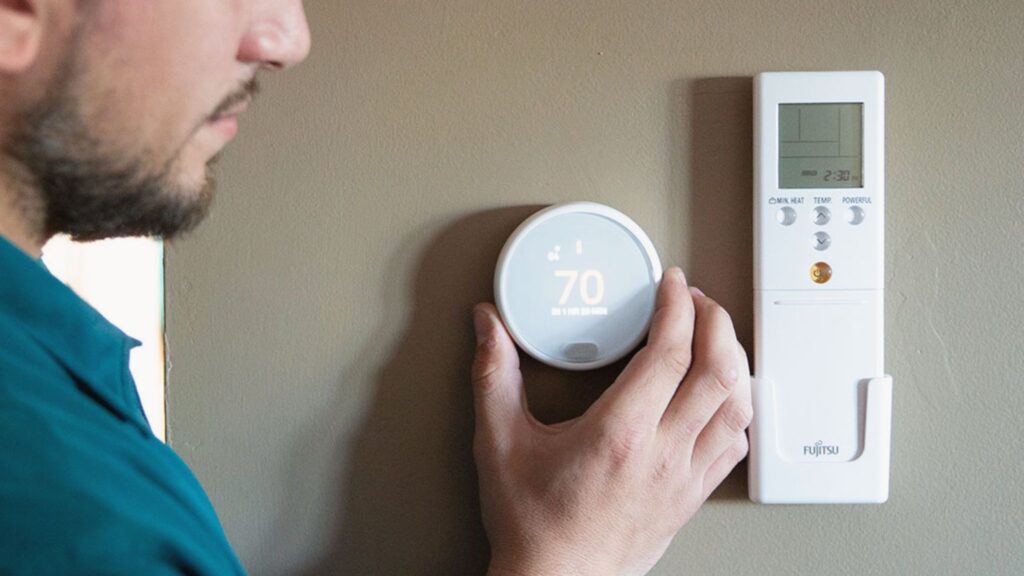
Where Are Thermostats Used?
The short answer: anywhere temperature needs to be controlled. In a residential context, that means your air conditioning system — but thermostats show up in far more places than most people realise.
In UAE homes and offices:
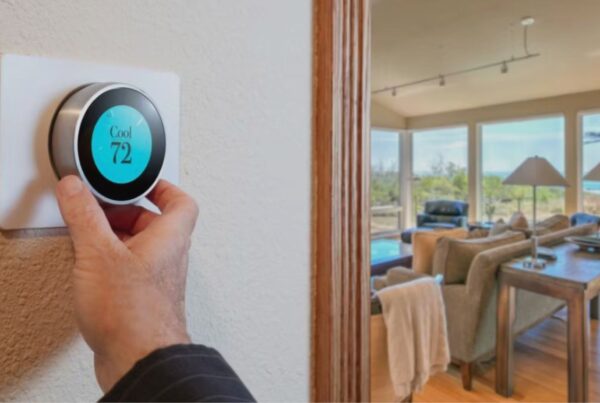
- Central AC / fan-coil units — The most common setup in UAE apartments. A wall-mounted thermostat controls the fan-coil unit that circulates chilled or heated water through your rooms. This is the type of thermostat most of this guide focuses on.
- Split AC systems — Standalone wall-mounted AC units, common in older buildings and some villas. These typically use the AC’s built-in remote control rather than a separate wall thermostat, but smart thermostats like Tado or DropAir can add scheduling and app control.
- Ducted AC systems — Common in villas. A single large unit pushes cooled air through ducts to multiple rooms, controlled by one or more wall thermostats. Multi-zone setups use separate thermostats for different parts of the house.
Beyond residential:
- Commercial buildings and offices
- Water heaters
- Refrigerators and freezers
- Industrial ovens and furnaces
- Server rooms and data centres (where overheating can destroy equipment)
- Medical equipment like incubators
Types of Thermostats Available in the UAE
Smart Thermostats
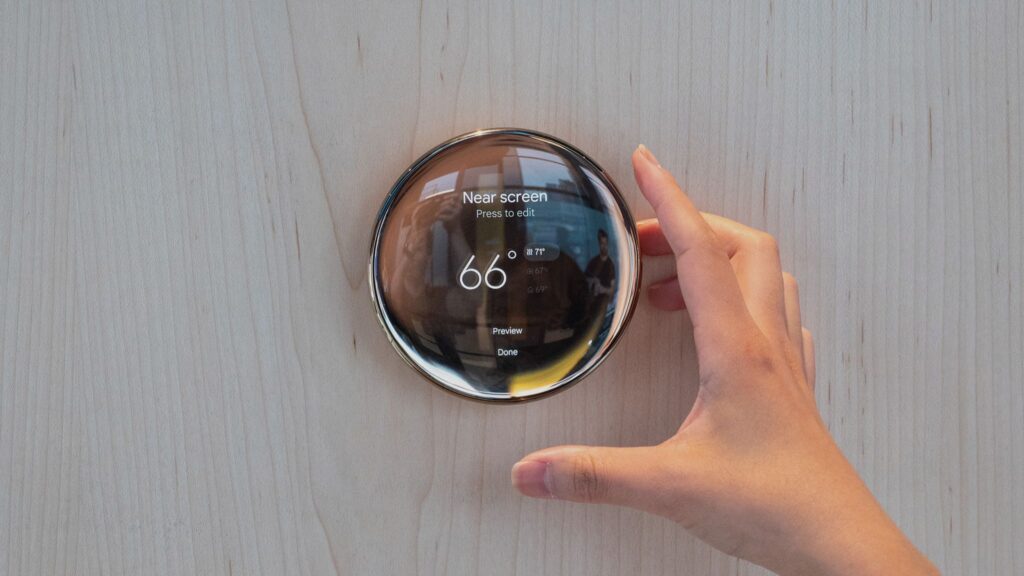
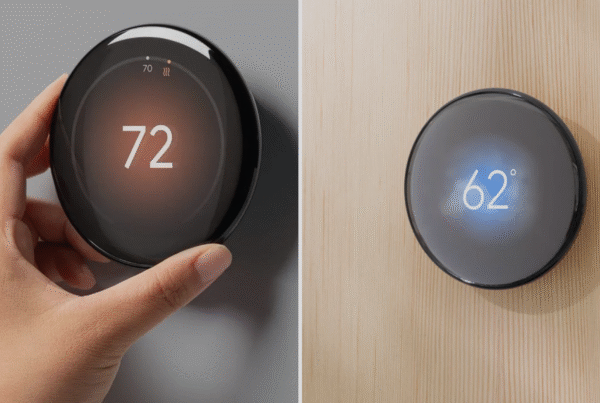
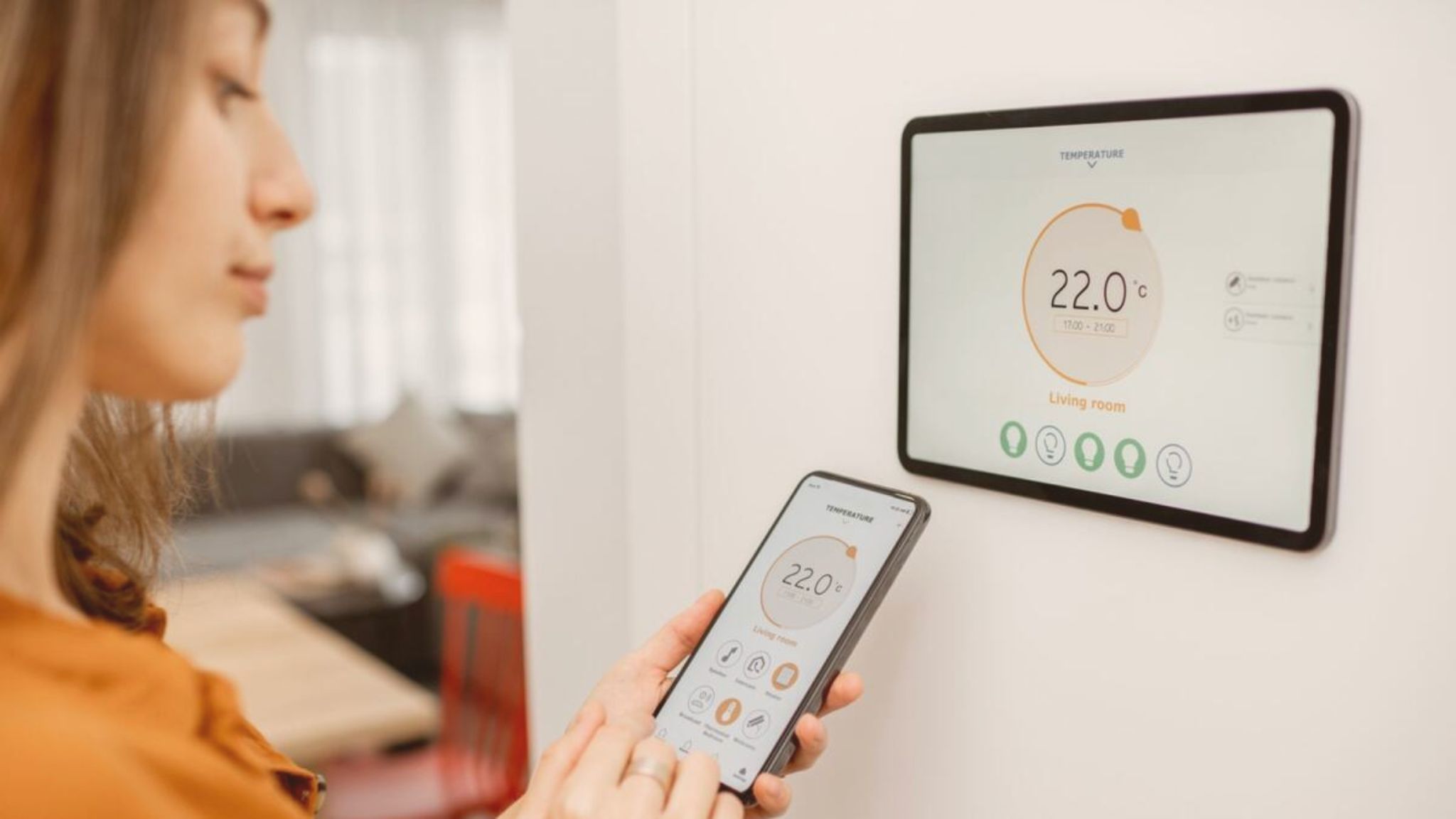
Smart thermostats are the most capable type on the market. They connect to Wi-Fi, are controlled through smartphone apps, and integrate with voice assistants like Google Home, Amazon Alexa, and Apple HomeKit. The best ones learn your habits over time and adjust your AC schedule automatically.
Key features:
- Remote control: Adjust your AC from anywhere — at the office, on holiday, or from bed.
- Learning algorithms: The Nest Learning Thermostat, for example, observes your manual adjustments for a week and then builds a schedule that mirrors your preferences.
- Occupancy sensing: Ecobee’s SmartSensors detect whether anyone is in the room and adjust cooling accordingly. No more cooling empty rooms.
- Energy reports: Monthly breakdowns of when your AC ran, how much energy it used, and how your usage compares to previous months.
- Room sensors: Place wireless sensors in different rooms so the thermostat uses readings from where you actually are, not just the hallway where it’s mounted.
Popular smart thermostat brands in the UAE: Google Nest, Ecobee, Honeywell, Tado, and Aqara. We compare all of them in our best thermostat brand for UAE homes guide.
Price range in UAE: AED 380–1,200 for the device, plus AED 150–600 for professional installation. Full pricing breakdown in our installation cost guide.
Digital / Programmable Thermostats
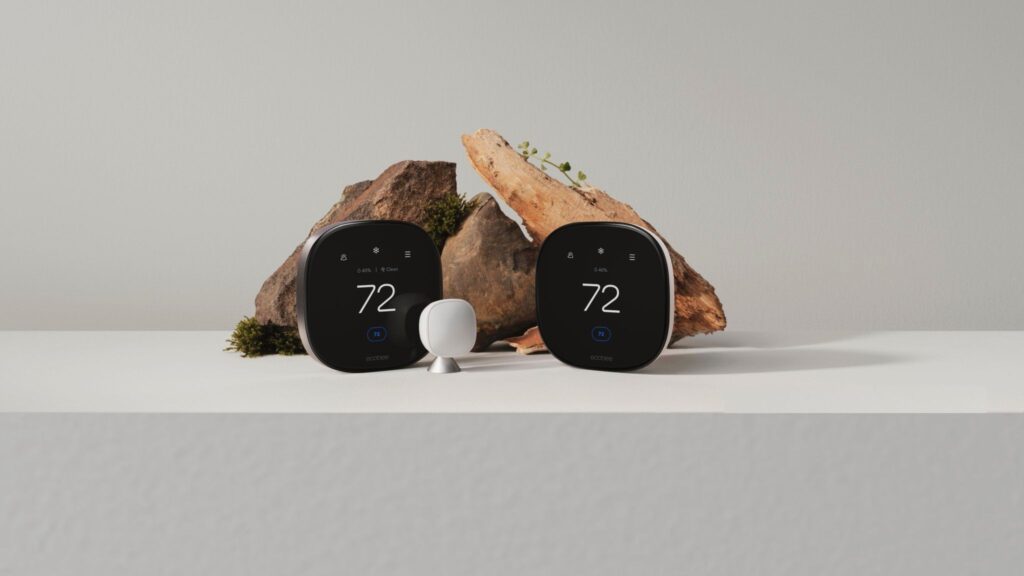
Digital thermostats sit in the middle ground. They have an LCD screen, precise electronic sensors, and the ability to set time-based schedules (e.g., 22°C at night, 24°C during the day, off while you’re at work). What they typically lack is Wi-Fi connectivity and app control — you program them using buttons on the device itself.
Best for: People who want better control than a basic thermostat but don’t need (or want) smartphone integration. Also a solid choice for rental properties where you want an upgrade that doesn’t require a significant investment.
Price range in UAE: AED 100–350.
Mechanical / Bimetallic Thermostats
The original thermostat design, still found in plenty of older UAE buildings. A simple dial or slider lets you set a rough target temperature, and the bimetallic strip inside handles the rest. No display, no programming, no precision.
Pros: Cheap (AED 50–100), virtually indestructible, and they work with almost any HVAC system.
Cons: Temperature accuracy is poor (2–3°C swing is typical), no scheduling capability, and no energy-saving features. In the UAE, where AC runs constantly for months, this lack of control translates directly into higher electricity bills.
If your home still has a mechanical thermostat, upgrading to even a basic digital model is one of the highest-value improvements you can make for your comfort and wallet. Replacing it with a smart thermostat will take it further — see our guide to the cheapest smart thermostats in Dubai.
Enclosure / Industrial Thermostats
These are specialised devices used in server rooms, IT cabinets, and industrial control panels. They manage airflow within enclosed spaces to prevent electronic equipment from overheating. Not relevant for most homeowners, but if you’re managing a commercial facility in the UAE, proper enclosure temperature control is critical — contact us for commercial-grade options.
Why Thermostats Matter More in the UAE Than Almost Anywhere Else
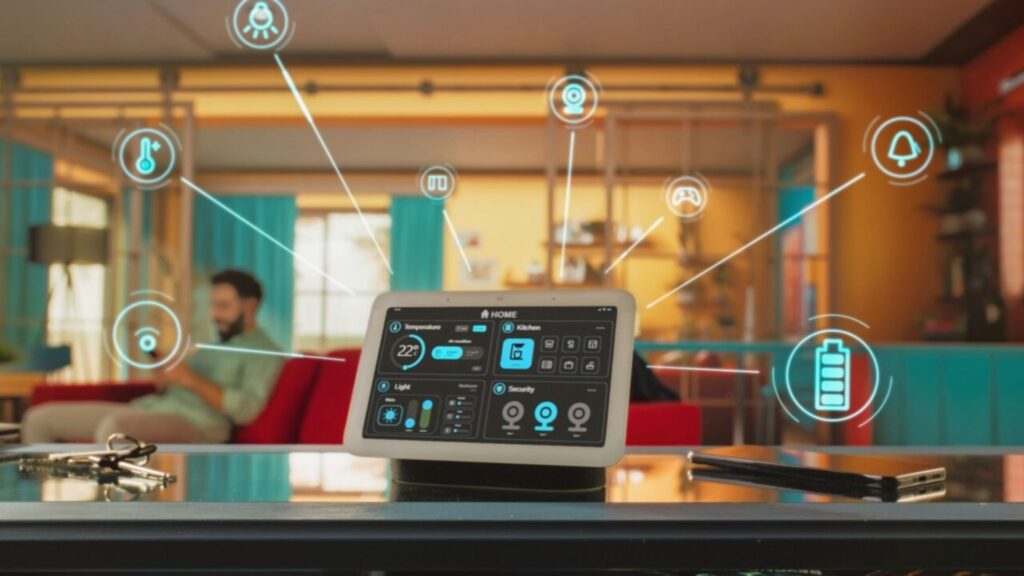
In temperate climates, a thermostat is a convenience. In the UAE, it’s a necessity. Here’s why the thermostat you choose has an outsized impact on your daily life and finances:
AC accounts for 60–70% of your electricity bill. In a Dubai apartment, a typical summer DEWA bill runs AED 800–1,200. In a villa, it can exceed AED 2,500. The thermostat is the single device that controls how efficiently that money is spent. A 1°C reduction in your setpoint (say, from 22°C to 23°C) reduces cooling energy consumption by 3–5% according to Daikin Middle East.
Smart thermostats deliver measurable savings. Ecobee reports up to 26% annual savings through its eco+ features. Nest claims 12% on heating and 15% on cooling. Even conservative real-world estimates of 15% savings translate to AED 120–375 per month for a typical UAE household during summer.
Comfort consistency matters in extreme heat. When it’s 48°C outside, a 2–3°C temperature swing from a cheap mechanical thermostat is the difference between comfortable and miserable. Digital and smart thermostats maintain tighter control, typically within 0.5–1°C of your setpoint.
Humidity control. Many smart thermostats monitor indoor humidity — a persistent problem in coastal UAE cities like Dubai, Abu Dhabi, and Sharjah. High humidity makes rooms feel warmer than they are and promotes mould growth. Ecobee Premium’s built-in humidity and air quality sensor is particularly useful for this.
For a practical walkthrough on using your thermostat to reduce costs, read our guide to reducing your DEWA bill with thermostats.
How to Choose the Right Thermostat for Your UAE Home
There’s no single “best thermostat” — it depends on your property, your budget, and your AC system. Here’s a practical decision framework:
Step 1: Identify your AC type. Is it a fan-coil unit (wall-mounted thermostat controls a chilled water system), a split AC (wall unit with remote control), or a ducted system (central unit with ducts throughout the house)? This determines which thermostats are compatible.
Step 2: Check your wiring. Count the wires behind your current thermostat. Most UAE fan-coil systems use 2-wire or 4-wire configurations. Smart thermostats typically need at least 4 wires, plus a C-wire for continuous power. If you’re missing wires, you’ll need adapters or a professional wiring modification.
Step 3: Decide your feature priority.
- Just want basic scheduling and a display? A digital programmable thermostat (AED 100–350) will do.
- Want app control and energy savings? A smart thermostat like the Nest standard model or Aqara (AED 380–500) is the minimum.
- Want learning, room sensors, and voice control? The Nest Learning 4th Gen (AED 839+) or Ecobee Premium (AED 950+) are the market leaders.
- Have a complex or commercial HVAC system? Honeywell T6 Pro (AED 450+) offers the broadest compatibility.
Step 4: Factor in installation. Almost every smart thermostat installation in the UAE requires a 220V-to-24V voltage conversion. Budget AED 150–600 for professional installation depending on complexity. The full pricing breakdown is in our installation cost guide.
Not sure what you need? WhatsApp us a photo of your current thermostat and we’ll recommend the best replacement for your setup within minutes.
Common Thermostat Problems in the UAE
UAE conditions create unique challenges for thermostats. The most frequent issues we see are calibration drift from heat exposure, dust contamination on sensors, power problems from loose wiring or missing C-wires, and compatibility mismatches between smart thermostats and district cooling systems.
We’ve written a dedicated deep-dive on all of these: 6 common thermostat issues every UAE homeowner should know.
Final Thoughts
Whether you’re upgrading from a 15-year-old manual dial or choosing between Nest and Ecobee for your new villa, the thermostat you pick has a direct, measurable impact on your comfort and your electricity bill. In the UAE’s climate, where AC is the single largest household expense, getting this choice right matters more than it does almost anywhere else in the world.
At thermostat.ae, we supply, install, and support every type of thermostat — from basic digital units to the latest Nest and Ecobee smart models. We serve all seven Emirates with same-day availability in Dubai and Sharjah, and next-day service to Abu Dhabi.
Browse our thermostat collection | Book installation | WhatsApp us for advice