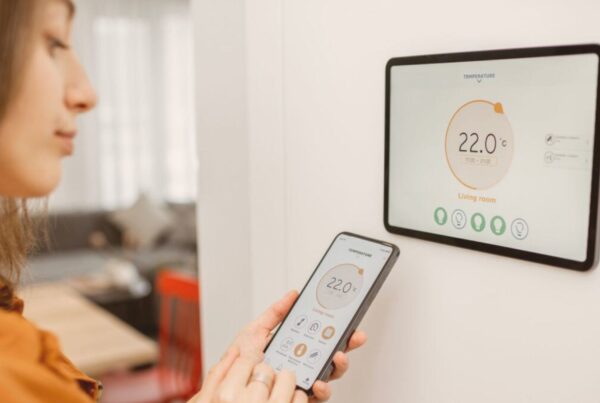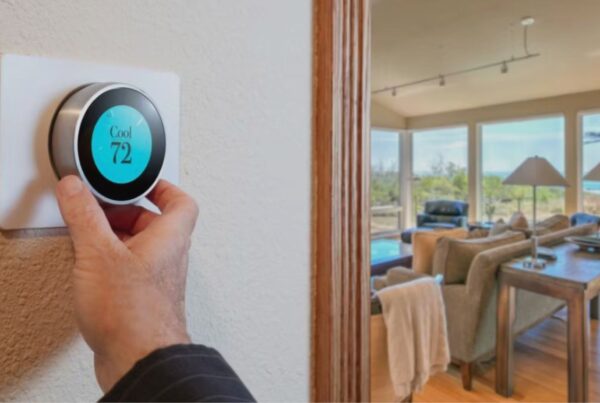
Yes, a Nest Thermostat is worth it for most UAE homes. The cost of a Nest Thermostat with professional installation ranges from AED 530 for the budget model to AED 1,200 for the Nest Learning 4th Gen, depending on your AC type and whether you need an adapter. The typical DEWA bill savings for a properly configured Nest in a UAE apartment run AED 50 to 150 per month during the six-month summer cooling season. That means the thermostat pays for itself within one to two summers for most homeowners.
But “worth it” depends on which Nest model you buy, what AC system you have, and whether you will actually use the smart features. A Nest Learning Thermostat that sits on the wall with its scheduling ignored saves no more than a basic manual thermostat. This guide breaks down the real costs, real savings, and honest limitations of each Nest model for UAE homes in 2026.
How Much Does a Nest Thermostat Actually Cost in the UAE
The total cost of owning a Nest Thermostat in the UAE is not just the device price. It includes the thermostat, an adapter (if your AC requires one), and professional installation. Here is how the total cost breaks down for each Nest model:
| Setup | Components | Best For |
|---|---|---|
| Budget setup | Nest Thermostat + adapter + installation | Studios, 1-bed apartments, renters |
| Mid-range setup | Nest Learning 3rd Gen + adapter + installation | 2-bed apartments, townhouses |
| Premium setup | Nest Learning 4th Gen + adapter + temp sensor + installation | Villas, large homes, Apple HomeKit users |
For exact current pricing on each thermostat and adapter, check our product page. For installation fees by service tier, see our installation cost guide.
One critical note: if you have a split AC (the most common type in UAE apartments), you need a DropAir Mini 6s adapter alongside the Nest Thermostat. If you have a fan coil unit (common in Empower/Tabreed district cooling buildings), you need a DropAir iPanel. Ducted systems with 24V wiring connect directly without any adapter. Our DropAir compatibility guide explains the differences.
How Much Can a Nest Thermostat Save on Your DEWA Bill
The Nest Thermostat saves money by reducing unnecessary cooling hours. It does this through three mechanisms: scheduled temperature changes that match your routine, home/away detection that switches to Eco mode when nobody is home, and energy usage reports that help you identify wasteful patterns.
Based on our installations across Dubai and Abu Dhabi, here is what typical savings look like by home type:
| Home Type | Typical Monthly DEWA Cooling Cost | Estimated Monthly Savings with Nest | Payback Period |
|---|---|---|---|
| Studio apartment (1 AC unit) | AED 300 to 500 | AED 30 to 75 | 7 to 18 months |
| 2-bed apartment (2 to 3 AC units) | AED 600 to 1,000 | AED 60 to 150 | 4 to 10 months |
| 3-bed villa (4 to 5 AC units) | AED 1,200 to 2,500 | AED 120 to 375 | 3 to 6 months |
These estimates assume summer operation (April through October) with Eco temperatures enabled during unoccupied hours and the AC set to 24 degrees Celsius when occupied. The savings percentage typically falls between 10% and 25% of your cooling-related electricity consumption, depending on how aggressively you use the scheduling and Eco features.
The larger your home and the more AC units you have, the faster the Nest Thermostat pays for itself. For a villa owner spending AED 2,000 per month on DEWA during summer, even a conservative 10% reduction means AED 200 per month in savings, which recoups the cost of a premium Nest setup within a single summer.
For a detailed breakdown using actual DEWA tariff slabs, read our guide to reducing your DEWA bill with a smart thermostat.
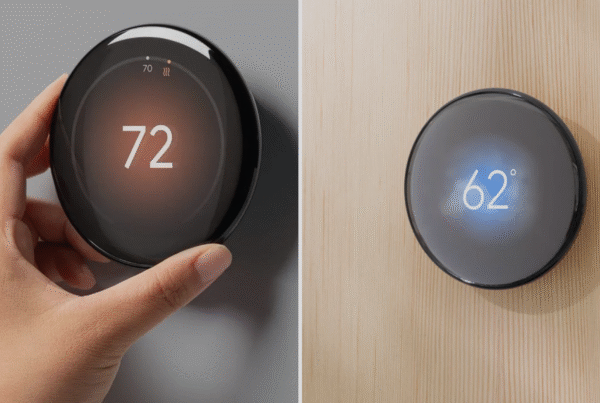
Is the Nest Learning Thermostat 4th Gen Worth the Premium
The Nest Learning Thermostat 4th Gen is Google’s most advanced thermostat and the most expensive Nest model. Whether the premium is worth it depends on whether you will actually benefit from its three headline features that the budget model lacks.
Feature 1: Smart Schedule (automatic learning). The 4th Gen learns your temperature preferences over time and builds a personalized schedule automatically. The budget Nest Thermostat uses a one-time guided setup instead. The learning feature is worth the premium if your household has an irregular schedule. If you leave for work at the same time every day and come home at the same time, you can set a manual schedule on the budget model and get similar results. If your routine varies (shift work, travel, family members with different schedules), automatic learning adapts without you reprogramming anything.
Feature 2: Included temperature sensor. The 4th Gen comes with a Nest Temperature Sensor that you place in a different room from the thermostat. The thermostat can then prioritize that room’s temperature instead of only reading the temperature at its own wall location. This is genuinely valuable in larger UAE homes where the thermostat might be in a hallway but you want the bedroom or living room to reach the target temperature. The budget Nest Thermostat does not support temperature sensors at all.
Feature 3: Dynamic Farsight and display. The 4th Gen has a 60% larger display with radar-based proximity detection that lights up with useful information as you approach. This is a nice quality-of-life improvement, but it does not affect energy savings or AC performance. If the display alone is the main draw for you, the premium may not be justified.
Our take: The 4th Gen is worth the extra cost for villas and larger apartments (3+ bedrooms) where schedule learning and room sensors make a measurable difference in comfort and savings. For studios and one-bedroom apartments with a single AC zone and a predictable routine, the budget Nest Thermostat delivers 90% of the value at a significantly lower price. For the full spec comparison, see our Nest Learning vs Nest Thermostat guide.
Is the Budget Nest Thermostat Worth It
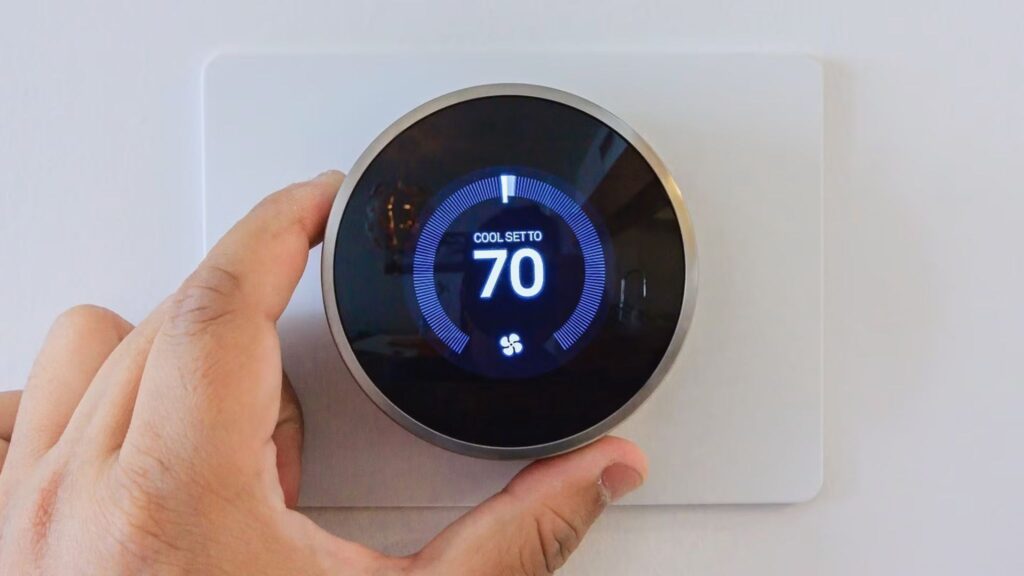
The standard Nest Thermostat (sometimes called the Nest Thermostat 4th Generation, not to be confused with the Nest Learning Thermostat 4th Gen) is the most affordable entry point into Google’s smart thermostat ecosystem. It is the model we install most frequently in UAE apartments.
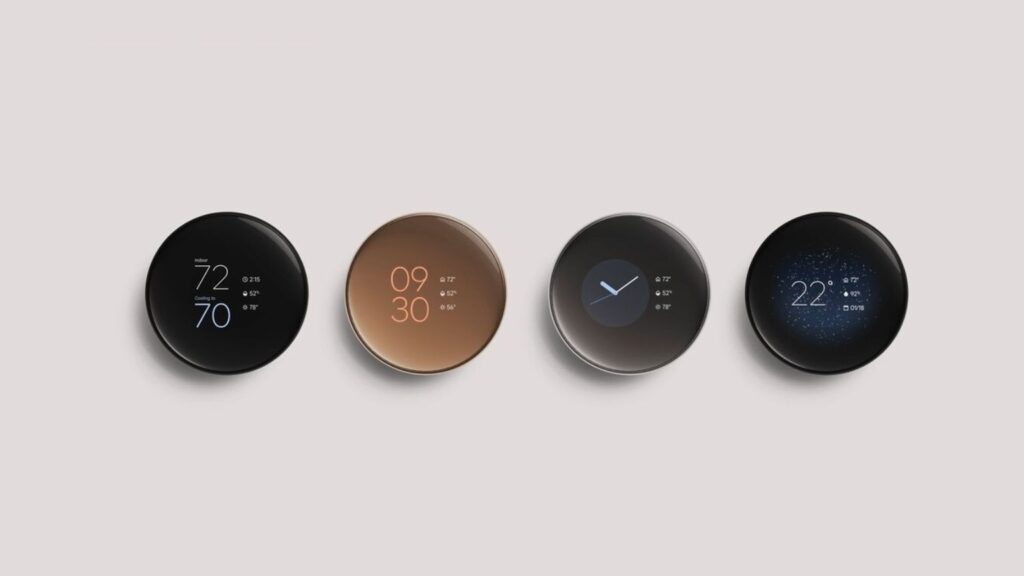
What you get: Google Home app control from anywhere, voice control through Google Home speakers and Alexa, home/away detection using your phone’s location, Quick Schedule guided setup, energy usage reports, and Apple HomeKit support. You also get a clean mirrored glass design in four color options (Snow, Sand, Fog, Charcoal) that blends well with most UAE interior styles.
What you give up compared to the Learning models: no automatic schedule learning (you set the schedule once during setup and adjust manually if needed), no temperature sensor support (single-zone reading only), no Farsight display, and a plastic body instead of stainless steel.
Is it worth it? For a studio or one-bedroom apartment with a single AC zone and a consistent daily routine, the budget Nest Thermostat is the smartest purchase. It delivers the core value proposition of a smart thermostat (app control, energy savings, home/away detection) at the lowest total cost. The features you give up (learning, sensors) are features that add minimal value in a small, single-zone space anyway.
Is the Nest 3rd Gen Still Worth Buying in 2026
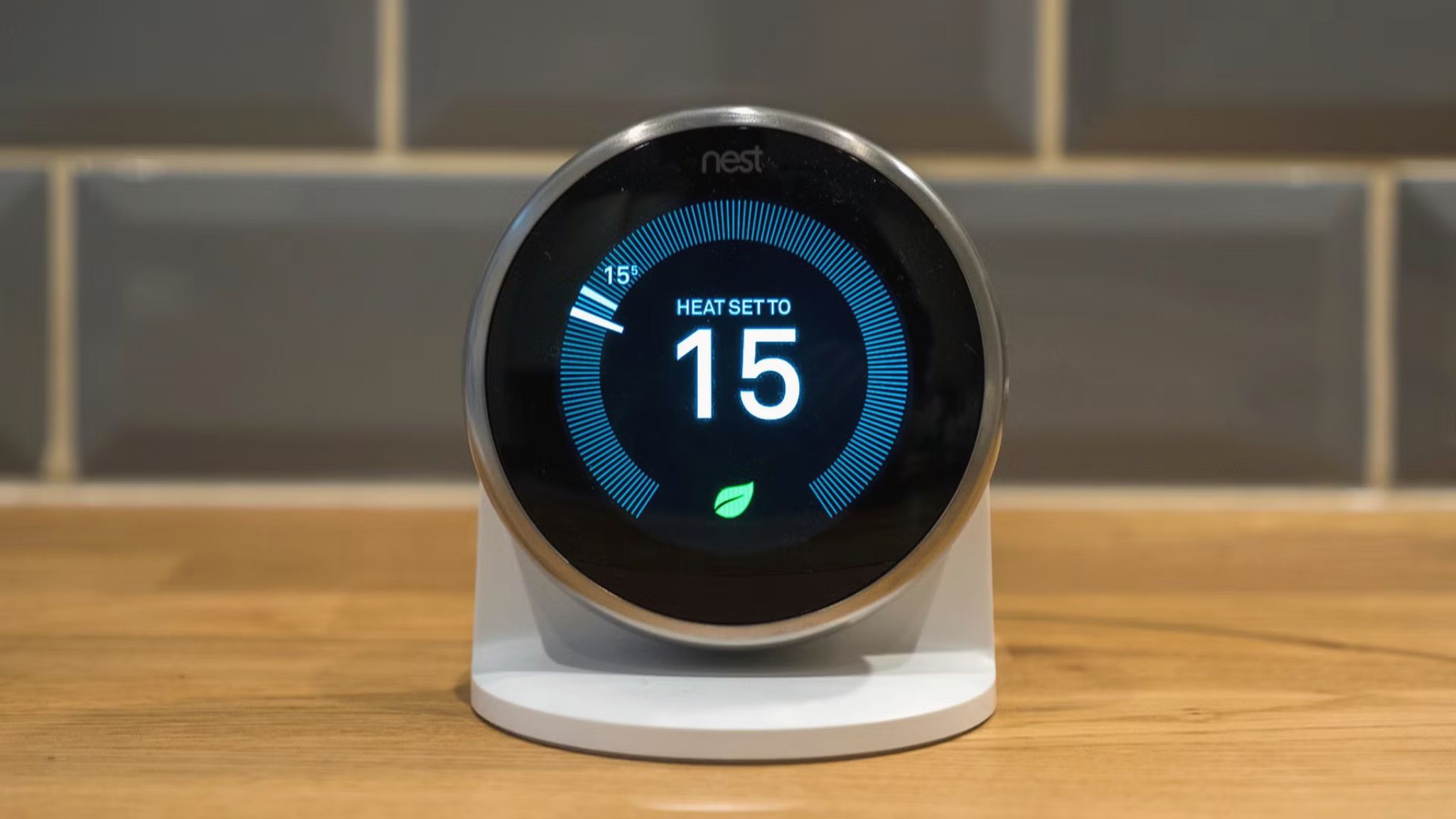
The Nest Learning Thermostat 3rd Gen is no longer sold directly by Google but remains available through authorized retailers like thermostat.ae. It still receives software updates and there is no announced end-of-support date (Google ended support for the 1st and 2nd Gen models in October 2025, but the 3rd Gen continues).
The 3rd Gen offers automatic schedule learning (Auto-Schedule), Farsight display, metal build quality, and compatibility with Nest Temperature Sensors (sold separately). It uses the Nest app for primary control with basic functionality in Google Home. It does not support Apple HomeKit.
Is it still worth buying? In 2026, the 3rd Gen occupies an interesting middle ground. It costs less than the 4th Gen but offers schedule learning that the budget model lacks. If you want automatic learning at a lower price than the 4th Gen, and you do not need Apple HomeKit or the larger display, the 3rd Gen remains a solid choice. The main risk is that Google could announce end-of-support for the 3rd Gen at some point in the future, though there is no indication this is imminent.
Honest Limitations of the Nest Thermostat in the UAE
No product review is complete without covering the downsides. Here are the real limitations we encounter during Nest installations and service calls in UAE homes:
1. Does not connect to split ACs without an adapter. This is the single biggest limitation for UAE buyers. Most UAE apartments use split AC systems, and the Nest Thermostat cannot connect to them directly. You need a DropAir Mini 6s (for splits) or DropAir iPanel (for fan coil units) to bridge the connection. This adds cost and complexity to the installation. Our adapter guide explains the full process.
2. Learning takes time. The Nest Learning Thermostat needs about one to two weeks of manual adjustments before its auto-schedule becomes accurate. During this period, you are essentially training the thermostat by setting temperatures manually every time you want a change. If you skip this phase or make inconsistent adjustments, the learned schedule will be unreliable. Some users find this frustrating and end up overriding the schedule permanently, which negates the learning feature entirely.
3. Dust sensitivity. The UAE’s ambient dust levels can affect the Nest’s temperature sensor accuracy over time. We recommend cleaning the thermostat exterior every three to four months with a dry microfibre cloth. Properties near construction sites or open desert areas may need more frequent cleaning. Our common thermostat issues guide covers sensor maintenance in detail.
4. Wi-Fi dependency. All smart features (app control, energy reports, home/away detection, software updates) require a stable Wi-Fi connection. In UAE apartment towers with thick concrete walls, the thermostat may struggle to maintain a connection if it is far from the router. A Wi-Fi extender or mesh node near the thermostat usually solves this. Read our Wi-Fi thermostat guide for troubleshooting tips.
5. The Nest app is being phased out. Google is migrating all Nest thermostat control to the Google Home app. The 4th Gen and budget model already use Google Home exclusively. The 3rd Gen still uses the Nest app for primary control but will eventually migrate. If you are heavily invested in the Nest app’s interface, be aware that Google Home works differently and some users find the transition disruptive.
Nest vs the Alternatives: Is It Still the Best Value
The Nest Thermostat is not the only smart thermostat available in the UAE. Here is how it stacks up against the main alternatives:
Nest vs Ecobee: Ecobee offers a touchscreen interface, built-in Alexa (on the Premium model), and stronger multi-room sensor support. Nest offers automatic schedule learning and deeper Google Home integration. Both cost roughly the same and both require the same adapters for UAE AC systems. If you use Google Home speakers, Nest is the better fit. If you use Alexa or want a touchscreen, Ecobee is the better choice. For the full comparison, see our Nest vs Ecobee guide.
Nest vs IR smart AC controllers (Sensibo, Cielo, Tado): IR controllers are cheaper and easier to install because they do not require any wiring. They send commands to your split AC via infrared, the same way a remote control does. However, they cannot read the AC’s actual temperature, they rely on their own sensor. They also cannot offer the deep scheduling, energy reports, and home automation that a wired Nest thermostat provides. For basic on/off control from your phone, an IR controller is cheaper. For full smart thermostat functionality, Nest with a DropAir adapter is the more capable solution. Our thermostat vs AC remote comparison covers this in depth.
For a broader comparison that includes Honeywell, see our best thermostat brands guide.
Who Should Not Buy a Nest Thermostat
A Nest Thermostat is not the right choice for everyone. Skip it if:
- You will not use the smart features. If you plan to set a temperature and never open the app, a basic programmable thermostat does the same job for less money. The value of a Nest comes from its scheduling, energy reports, and automation. Without using those features, you are paying a premium for a thermostat that functions like a basic one.
- You have a VRF/VRV system without confirmed compatibility. VRF systems use complex communication protocols that Nest does not support natively. Before purchasing, contact our team on WhatsApp with your system details so we can verify compatibility.
- You want humidity control. The budget Nest Thermostat monitors humidity but cannot control a humidifier or dehumidifier. If active humidity management is important (common in coastal UAE properties), the Nest Learning 4th Gen or an Ecobee with humidifier/dehumidifier support is a better choice. Read our thermostat vs humidistat guide for more on humidity control.
- You are renting short-term and do not want to invest in installation. If your lease is under a year, the installation and removal cost may not be justified. An IR smart AC controller that sticks to the wall with adhesive tape might be a more practical temporary solution.
Frequently Asked Questions
Is the Nest Thermostat worth it in the UAE in 2026?
Yes, for most UAE homeowners. A Nest Thermostat saves AED 50 to 150 per month on DEWA bills during summer through scheduled cooling and home/away detection. The total cost of the thermostat plus installation is typically recovered within one to two summers. The value is highest for homes with multiple AC units and variable occupancy schedules.
How much does a Nest Thermostat cost in the UAE with installation?
The total cost depends on your AC type and the Nest model you choose. A budget Nest Thermostat setup (thermostat + adapter + installation) is the most affordable option. A premium Nest Learning 4th Gen setup costs more but includes automatic scheduling and a temperature sensor. See our installation cost guide for current pricing by tier.
Does the Nest Thermostat work with split ACs in the UAE?
Not directly. Nest thermostats use 24V HVAC wiring, which UAE split ACs do not have. You need a DropAir Mini 6s adapter installed inside the indoor unit to bridge the connection. Once the adapter is in place, the Nest Thermostat controls the split AC through the Google Home app with full scheduling and energy reporting.
Which Nest model should I buy for a Dubai apartment?
For studios and one-bedroom apartments, the Nest Thermostat (budget model) offers the best value. It provides app control, energy reports, and home/away detection at the lowest cost. For two to three bedroom apartments where you want automatic scheduling that learns your routine, consider the Nest Learning Thermostat 3rd Gen or the 4th Gen.
How long does a Nest Thermostat take to learn my schedule?
The Nest Learning Thermostat typically needs one to two weeks of manual temperature adjustments before its Auto-Schedule (3rd Gen) or Smart Schedule (4th Gen) becomes accurate. During this period, you set temperatures manually whenever you want a change, and the thermostat records the pattern. After that, it handles adjustments automatically.
Is the Nest Thermostat better than an IR smart AC controller?
For full smart thermostat functionality (scheduling, energy reports, multi-room sensors, deep smart home integration), Nest with a DropAir adapter is the more capable solution. IR controllers like Sensibo and Cielo are cheaper and easier to install, but they offer more limited control and cannot read your AC system’s actual data. Read our thermostat vs AC remote comparison for the full breakdown.
Can thermostat.ae install a Nest Thermostat in my home?
Yes. We supply and install all Nest Thermostat models across every emirate in the UAE, with same-day service in Dubai and next-day service across Abu Dhabi, Sharjah, and all other Emirates. Our technicians check your AC compatibility, handle all wiring, and configure the Google Home app before leaving.
Ready to buy? Browse the Nest Thermostat and Nest Learning Thermostat in our shop, or message us on WhatsApp at +971 50 633 7803 for a free compatibility check and quote. We install across Dubai, Abu Dhabi, Sharjah, and all other Emirates.
Call us directly at +971 50 633 7803 or visit our contact page.