The short answer is yes, your AC can physically run without a thermostat. But what actually happens when it does depends entirely on which type of AC system you have. And in the UAE, where cooling accounts for roughly 60% of a typical household electricity bill, running your AC without proper temperature control can cost you hundreds of dirhams per month in wasted energy while simultaneously shortening the life of your compressor.
This is not a theoretical question for most UAE residents. Thermostats fail, get damaged during renovations, or simply stop working after years of continuous summer operation. Knowing what happens to your specific AC type, and what temporary measures you can take while waiting for a replacement, is practical knowledge that can save you money and prevent equipment damage.
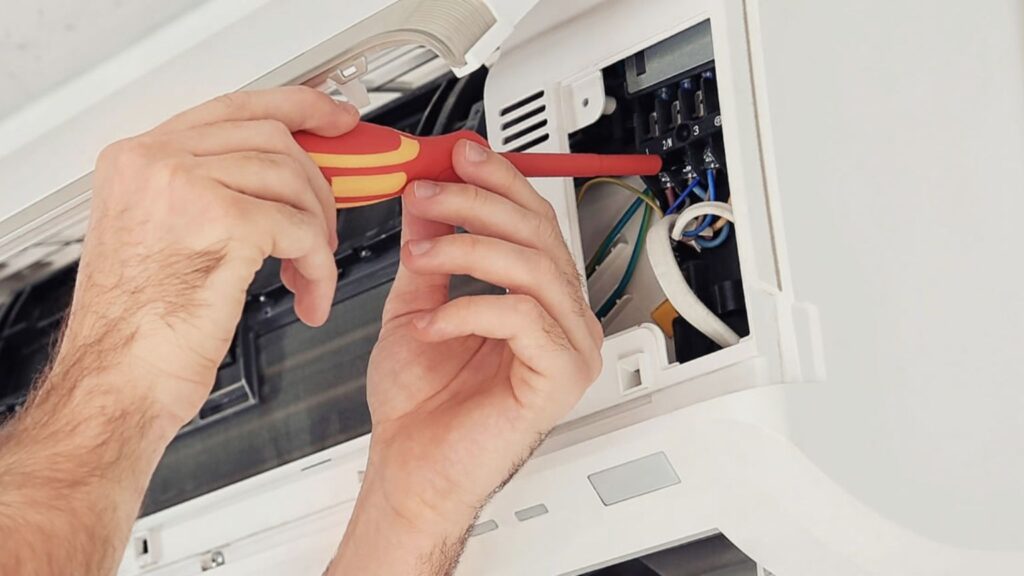
What a Thermostat Actually Does Inside Your AC System
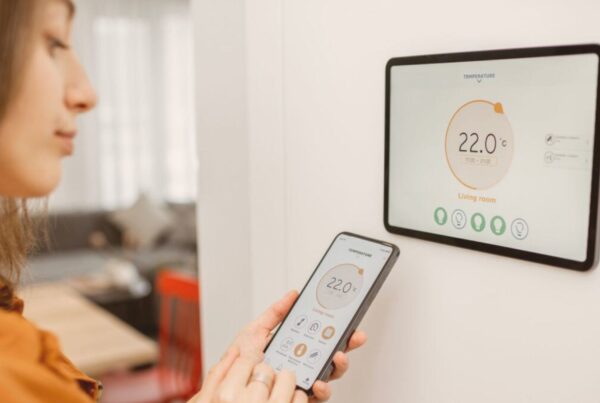
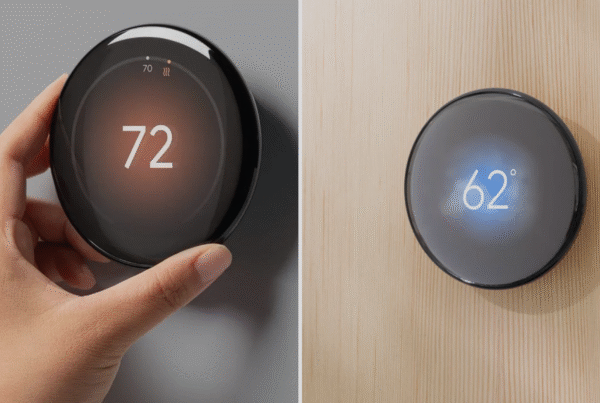
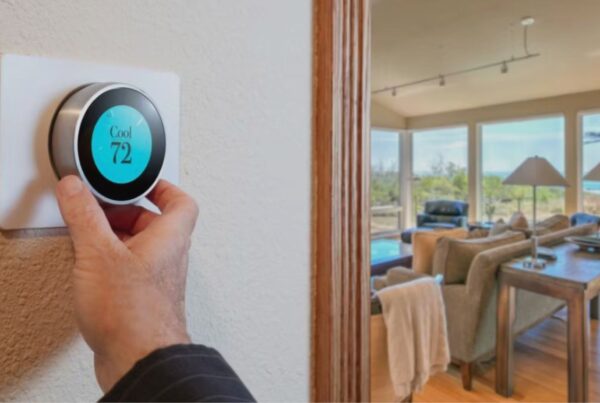
A thermostat is a closed-loop controller. It measures the current room temperature through a built-in sensor (or a remote sensor placed elsewhere in the room), compares that reading to the temperature you have set, and sends an electrical signal to your AC system to either start cooling or stop cooling based on the difference.
Without this feedback loop, your AC has no way to know when the room is cold enough. It just keeps running. Think of it like driving a car with no speedometer and a stuck accelerator. The engine works fine, but you have no way to control the speed, and eventually something will wear out or break from the constant strain.
In technical terms, a thermostat performs three specific functions:
- Temperature sensing. It reads the current room temperature through a thermistor (a resistor that changes its electrical resistance as temperature changes). This is how the thermostat knows whether the room needs cooling.
- Switching. It opens and closes electrical circuits to turn the compressor and fan on or off. In a standard 24V system, the thermostat connects specific wires (R, Y, G, W, and C terminals) to control different functions: compressor, fan, heating, and so on.
- Scheduling (smart models only). Modern smart thermostats add a time dimension. They know when you are typically home, when you sleep, and when the house is empty, and they adjust the AC operation accordingly to save energy. This is where the real savings come from. For more on how this works, read our guide to how Wi-Fi thermostats work.
Remove any one of these functions, and you lose control over your AC. But the specific consequences depend on which type of AC system is installed in your home.
Split AC Systems: Your Remote Is Already a Thermostat
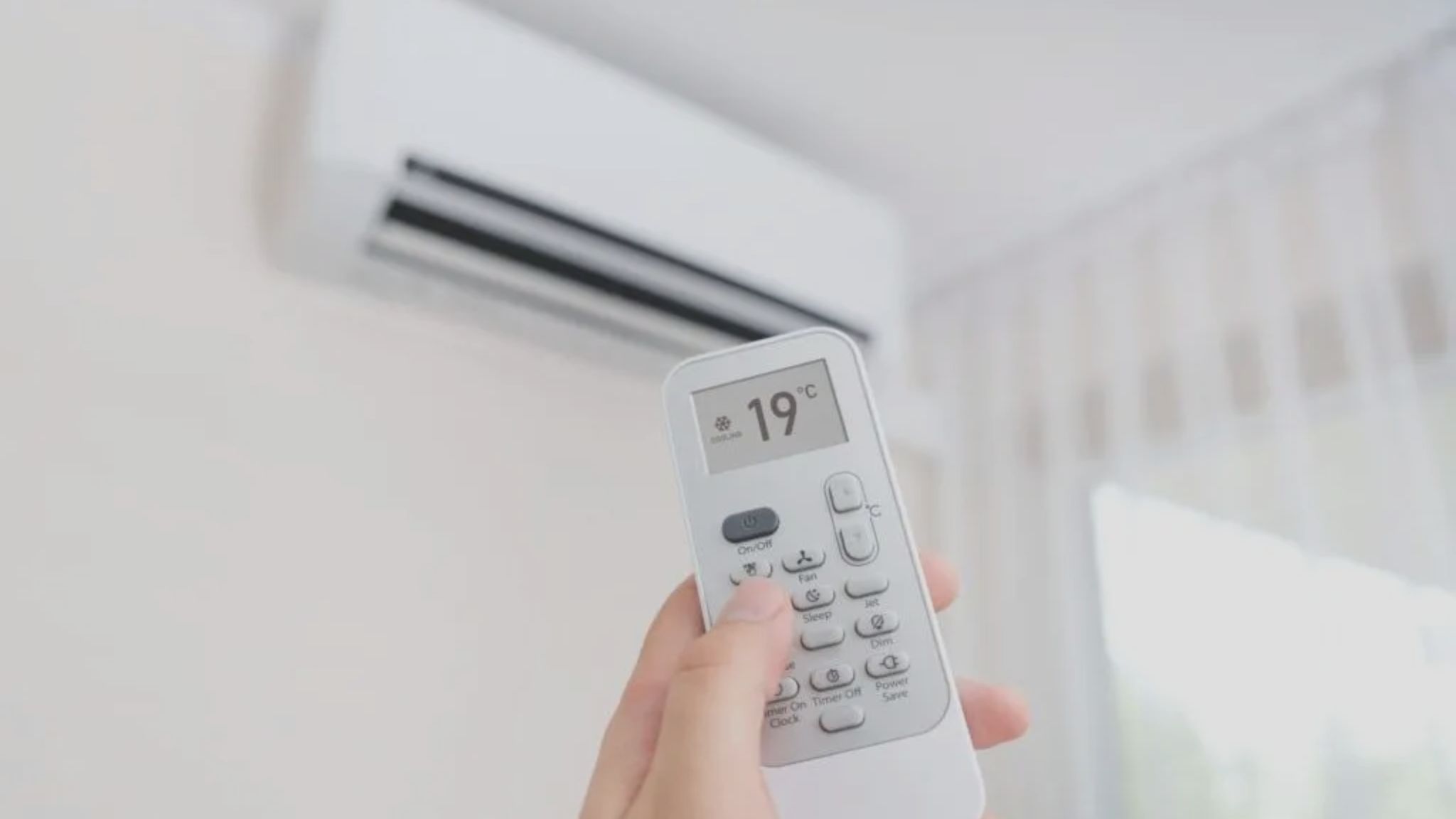
This is where the answer gets interesting for most UAE residents. If you have a wall-mounted split AC (the most common type in UAE apartments and smaller villas), your system already has a built-in temperature controller inside the indoor unit. The thermistor sensor is located on the evaporator coil or in the air intake area of the indoor unit itself. The remote control you use to set the temperature is communicating with this built-in controller via infrared signals.
In other words, your split AC’s remote control is functioning as a basic thermostat. It sets the target temperature, and the indoor unit’s controller handles the switching: turning the compressor on when the room is warmer than the setpoint, and cycling it off when the target is reached.
So can a split AC work without a wall-mounted thermostat? Yes, because it was never designed to use one in the first place. The temperature control is handled internally.
The problem arises when you lose the remote control, or when the indoor unit’s built-in controller malfunctions. Without the remote, you have no way to set or change the temperature. The AC will continue running at whatever settings were last programmed. Some indoor units have a manual “auto” button on the unit itself (usually behind a small panel on the front), which will run the AC at a default temperature (typically 24 to 25 degrees Celsius), but you lose the ability to fine-tune anything.
If you want to add a proper wall-mounted smart thermostat to a split AC (for scheduling, energy reports, and app-based remote control), you need a compatibility adapter like the DropAir Mini 6s. The adapter bridges the communication gap between a 24V smart thermostat and your split AC’s proprietary control board. Our DropAir compatibility guide explains the full process.
Fan Coil Units: The Thermostat Controls Everything
Fan coil units (FCUs) are common in newer UAE apartment towers, especially those connected to district cooling networks from providers like Empower in Dubai or Tabreed in Abu Dhabi. An FCU does not have its own compressor. Instead, it uses chilled water piped from a central plant to cool the air. A motorised valve controls how much chilled water flows through the coil, and a fan blows air across the coil and into your room.
The wall thermostat in an FCU setup controls both the valve and the fan. It tells the valve to open or close based on the temperature difference between the room and your setpoint, and it controls the fan speed (low, medium, high, or auto).
If you remove or disconnect the thermostat from a fan coil unit, two things can happen depending on the wiring:
- The valve defaults to closed and the fan stops. This is the most common scenario. Without the thermostat providing a signal to open the valve, no chilled water flows and you get no cooling at all. Your apartment gets hot.
- The valve stays open and the fan runs continuously on its last speed. This happens in some wiring configurations where the valve is normally open (NO) rather than normally closed (NC). In this case, you get uncontrolled continuous cooling. The room can become uncomfortably cold, and the chilled water consumption shows up on your Empower or Tabreed bill as a spike in usage.
Neither outcome is desirable. For FCU systems, the thermostat is not optional. It is the only control interface between you and the cooling system. If your FCU thermostat fails, replacement should be treated as urgent. The DropAir iPanel adapter paired with a Nest Thermostat or Ecobee3 Lite is one of the most popular FCU upgrade paths we install in Dubai Marina, JBR, and Downtown Dubai apartments.
Ducted AC Systems: No Thermostat Means No Control
Ducted AC systems are common in larger UAE villas. The indoor unit sits in the ceiling void and distributes cooled air through a network of ducts to multiple rooms. The wall thermostat is typically the only user-facing control for the entire system.
If your ducted system uses standard 24V wiring (common with American brands like Carrier, Trane, York, and Lennox), removing the thermostat breaks the circuit completely. The AC will not turn on at all because there is no signal telling the system to start. The thermostat wiring carries the commands for the compressor, the fan, and sometimes zone dampers. Without the thermostat, those commands do not exist.
An HVAC technician can bypass the thermostat temporarily by jumping (connecting) the R and Y wires at the air handler, which forces the compressor and fan to run continuously. But this is a temporary emergency measure, not a solution. The AC will run without stopping, there is no temperature regulation, and you risk freezing the evaporator coil if the system runs too long without cycling off.
For ducted systems, replacing a broken thermostat is straightforward because they already use 24V wiring. Any standard smart thermostat (Nest, Ecobee, Honeywell) can connect directly without an adapter, as long as the wiring matches. Our installation team handles ducted thermostat replacements across all Emirates and can typically complete the job within an hour.
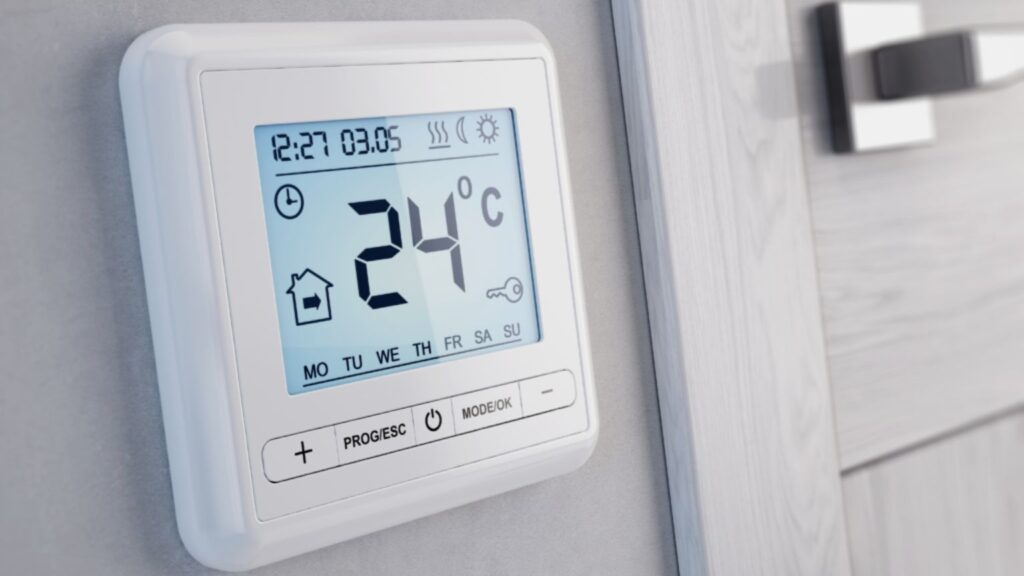
What Happens When AC Runs Continuously Without Temperature Control
Whether your thermostat is missing, broken, or bypassed, the end result in most cases is an AC system that runs without cycling off. Here is what that does to your equipment and your bills over days and weeks of continuous operation:
Compressor wear. The compressor is the most expensive component in your AC system. It is designed to cycle on and off, with rest periods between cooling cycles. Running continuously eliminates those rest periods. The compressor overheats, the lubricating oil breaks down faster, and internal components experience accelerated wear. In the UAE’s summer heat, where the compressor is already working harder than in milder climates, continuous operation can cut the compressor’s lifespan by years.
Evaporator coil icing. When the AC runs non-stop, the evaporator coil can drop below freezing temperature. Moisture from the air condenses on the coil and freezes into a layer of ice. This ice insulates the coil, reducing its ability to absorb heat, which causes the coil to get even colder, which causes more ice buildup. The result is a block of ice inside your AC unit, reduced airflow, and eventually the AC stops cooling entirely until the ice melts.
Electrical stress. Continuous operation means continuous power draw. In the UAE, where grid voltage can fluctuate during peak summer demand, prolonged operation increases the risk of component failure from voltage spikes. Circuit breakers may trip more frequently, and wiring that was adequate for cycled operation can overheat under sustained load.
Humidity problems. When an AC cycles properly, it alternates between cooling periods (which remove humidity) and rest periods (which allow condensation to drain). Continuous operation can actually increase indoor humidity in some situations because the evaporator coil gets too cold for proper dehumidification. You end up with a room that feels clammy even though the temperature is low. For more on managing humidity in the UAE, read our thermostat vs humidistat comparison.
The DEWA Bill Impact of Running Without a Thermostat
Running your AC without a functioning thermostat in the UAE has a direct and measurable impact on your electricity bill. Here is why the numbers add up so quickly.
A typical split AC in a UAE apartment draws between 1.0 and 2.5 kilowatts per hour when the compressor is running, depending on the unit’s capacity and efficiency rating. Under normal thermostat-controlled operation, the compressor cycles on and off throughout the day. In a well-insulated apartment set to 24 degrees Celsius, the compressor might run 50 to 60% of the time during summer months. That means for every 10 hours, the compressor runs 5 to 6 hours and rests for 4 to 5 hours.
Without a thermostat, the compressor runs 100% of the time. That extra 40 to 50% of operating time translates directly to additional kilowatt-hours on your DEWA bill. For a single 2kW split AC running an extra 4 to 5 hours per day, that is roughly 8 to 10 additional kWh per day, or 240 to 300 extra kWh per month.
At DEWA’s residential slab rates (which increase the more you consume), that additional consumption can add AED 100 to AED 200 per month, per AC unit. In a villa with four or five AC units, the total waste from missing or broken thermostats can exceed AED 500 to AED 1,000 per month during peak summer.
A smart thermostat with proper scheduling and home/away detection typically pays for itself within one to two summer months through reduced consumption alone. For the full breakdown, read our guide on how to reduce your DEWA bill with a smart thermostat.
What to Do If Your Thermostat Breaks Mid-Summer
A thermostat failure in July or August in the UAE is an emergency. Here is a step-by-step response based on your system type:
If you have a split AC: Use the manual button on the indoor unit (usually behind a small flip-open panel on the front face of the unit). This runs the AC on an automatic mode at a default temperature. It is not precise, but it will keep the room cool until you get a replacement remote or install a wall thermostat. If you cannot find the manual button, check your AC brand’s manual or contact our team on WhatsApp with your AC model and we will walk you through it.
If you have a fan coil unit: Do not attempt to bypass the thermostat yourself. Incorrect wiring can leave the valve permanently open (which wastes chilled water and money) or damage the FCU’s actuator motor. Call for a replacement thermostat installation. We carry stock of all major thermostat models and can usually do same-day replacement in Dubai.
If you have a ducted system: A qualified technician can temporarily jump the R and Y wires at the air handler to force the AC to run while you wait for a replacement thermostat. This is safe as a temporary measure for a day or two, but should not be left in place longer than necessary because the AC will run continuously without cycling. Do not attempt this yourself unless you are comfortable working with low-voltage electrical wiring and have isolated the circuit at the breaker first.
In all cases, the fastest resolution is a thermostat replacement. If you are upgrading from a basic model anyway, a mid-summer failure is a good time to switch to a smart thermostat. Our installation cost guide covers pricing for different setups, and we offer same-day service in Dubai and next-day across Abu Dhabi, Sharjah, and all other Emirates.
Thermostat vs AC Remote: They Are Not the Same Thing
One common point of confusion in the UAE is the difference between a wall-mounted thermostat and an AC remote control. Many residents use the terms interchangeably, but they serve different functions and work in very different ways.
An AC remote control communicates with your split AC’s indoor unit using infrared (IR) signals, the same technology as a TV remote. It sends commands (temperature setpoint, fan speed, mode) to the indoor unit, which then handles temperature control using its built-in thermistor. The remote has no temperature sensor of its own (or if it does, it only measures the temperature where the remote is sitting, not where the AC is mounted). The remote must be pointed at the indoor unit for the signal to register.
A wall-mounted thermostat is wired directly into the AC system’s control circuit. It has its own temperature sensor that reads the room temperature at the thermostat’s location on the wall. It sends electrical signals (not IR) to control the AC. Because it is wired, there are no line-of-sight limitations and no batteries to replace (in most wired models). Smart thermostats add Wi-Fi connectivity for app-based control, scheduling, energy reports, and integration with voice assistants like Google Home and Alexa.
The practical upside of a wall thermostat over a remote is that it provides continuous, automatic temperature regulation without you needing to interact with it. Set it once (or let a smart thermostat learn your schedule), and it manages your cooling 24/7. An AC remote only does what you tell it to do in the moment, and if the IR signal does not reach the indoor unit (because someone left a curtain in the way, for example), the command does not register.
For the full comparison with practical recommendations for UAE homes, read our thermostat vs AC remote guide.
Frequently Asked Questions
Can my split AC work without any thermostat or remote?
Technically, yes. Most split AC indoor units have a manual operation button (usually behind a small panel on the front of the unit) that runs the AC in auto mode at a default temperature, typically 24 to 25 degrees Celsius. However, you lose the ability to adjust the temperature, change fan speed, or set a timer. This is a temporary solution, not a long-term one.
What happens to my DEWA bill if my thermostat breaks and the AC runs non-stop?
A single 2kW split AC running continuously instead of cycling normally can add AED 100 to AED 200 per month to your DEWA bill. For villas with multiple AC units, the total waste can exceed AED 500 per month during peak summer. Replacing the thermostat quickly is both a comfort and a financial priority. Read our full DEWA savings guide for detailed calculations.
Can I add a Nest or Ecobee thermostat to my split AC?
Not directly. Split ACs use proprietary control protocols, not the 24V wiring that Nest and Ecobee require. You need a DropAir Mini 6s adapter to bridge the connection. The adapter installs inside the split AC’s indoor unit and provides standard 24V thermostat terminals for the smart thermostat to connect to.
My fan coil unit thermostat stopped working. Can I bypass it temporarily?
This is not recommended. Bypassing an FCU thermostat can leave the chilled water valve permanently open, wasting water and driving up your Empower or Tabreed bill. It can also damage the valve actuator motor. Contact a technician for same-day replacement instead. WhatsApp us for urgent FCU thermostat replacements in Dubai.
Is an AC remote the same as a thermostat?
No. An AC remote sends infrared signals to your split AC’s indoor unit to set the temperature. A wall-mounted thermostat is wired directly into the AC’s control circuit and continuously monitors room temperature to automatically cycle the AC on and off. Smart thermostats also add scheduling, energy reports, and app control. Read our thermostat vs AC remote comparison for the full breakdown.
Which thermostat should I buy to replace a broken one in the UAE?
It depends on your AC type. For ducted systems with 24V wiring, a Nest Thermostat or Ecobee3 Lite connects directly. For fan coil units, you need the thermostat plus a DropAir iPanel adapter. For split ACs, you need the thermostat plus a DropAir Mini 6s. Our brand comparison guide helps you choose the right model.
Does thermostat.ae offer emergency thermostat replacement?
Yes. We carry stock of all major thermostat models and DropAir adapters. In Dubai, we offer same-day installation. Across Abu Dhabi, Sharjah, and all other Emirates, we offer next-day service. Message us on WhatsApp or call +971 50 633 7803 to book.
Need a thermostat replacement or upgrade? Browse our full range of smart thermostats and adapters, or message us on WhatsApp at +971 50 633 7803 with a photo of your current setup for a free compatibility check. We serve homeowners across Dubai, Abu Dhabi, Sharjah, and every other emirate with same-day and next-day service.