A thermostat controls temperature. A humidistat controls humidity. They measure different things, connect to different equipment, and solve different problems. In the UAE, where summer temperatures exceed 45 degrees Celsius and coastal humidity regularly hits 80 to 95%, understanding when you need one, the other, or both can make a real difference in your comfort, your electricity bill, and the long-term health of your property.
One common source of confusion: a humidistat and a hygrostat are the same device. The term “hygrostat” comes from the Greek word “hygros” (meaning moisture), while “humidistat” follows the same naming convention as “thermostat.” Different manufacturers and regions use different names, but the function is identical. Both measure relative humidity and control a humidifier or dehumidifier to maintain a set level. If you have been searching for “hygrostat vs humidistat,” the answer is that there is no difference between them.
What Does a Thermostat Do
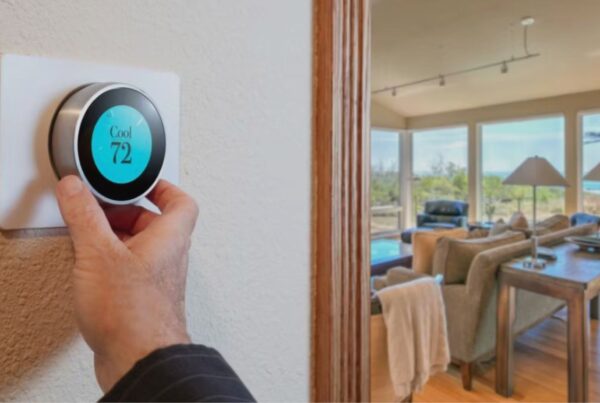
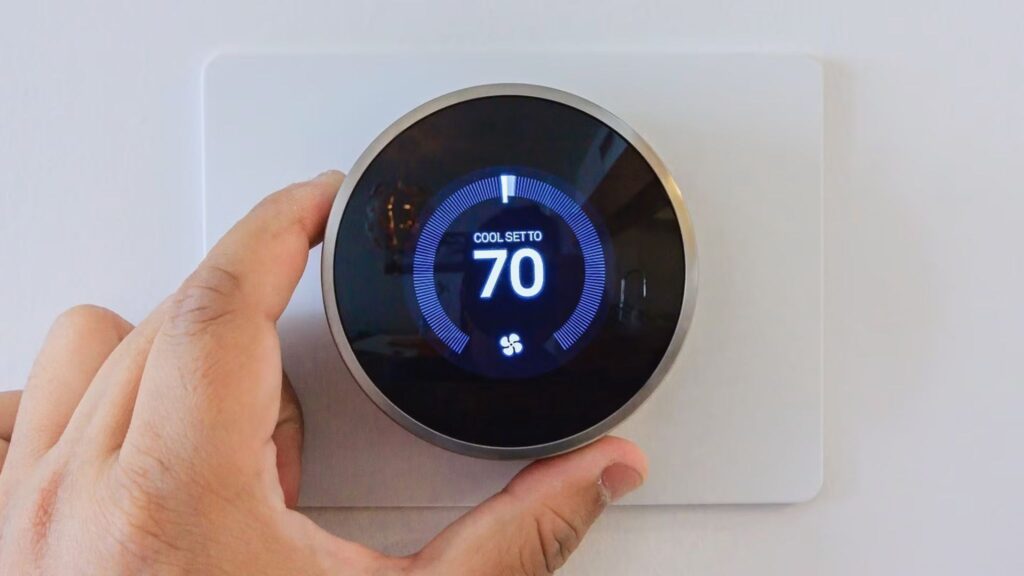
A thermostat measures the air temperature in a room and controls your AC system to maintain a target temperature. When the room temperature rises above your setpoint, the thermostat signals the AC to start cooling. When it drops to the target, the thermostat signals the AC to stop. This cycle repeats continuously to keep the room within a narrow temperature range.
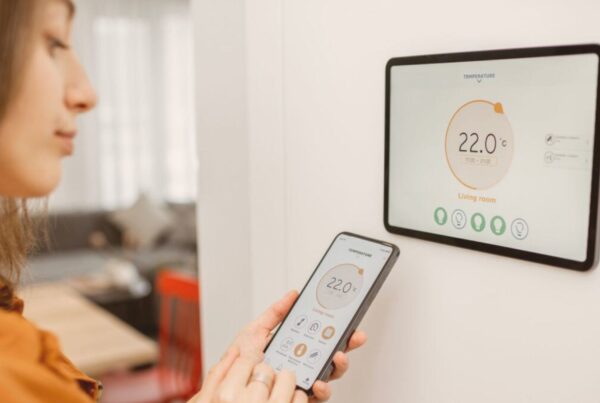
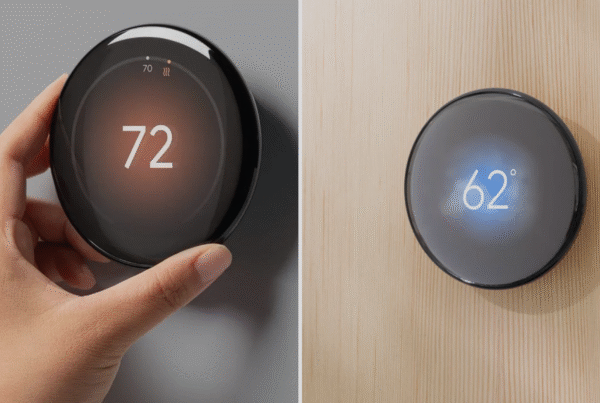
Modern smart thermostats go beyond basic on/off switching. Models like the Google Nest Thermostat and Ecobee3 Lite add Wi-Fi app control, automatic scheduling, home/away detection, energy usage reports, and voice assistant integration. They still perform the same core function (measuring temperature and switching the AC on and off), but they do it with far more intelligence and far less manual intervention.
In the UAE, a thermostat is not optional. It is the control interface between you and your AC system. Without one, your AC either runs continuously (wasting energy and stressing the compressor) or does not run at all. Every residential AC setup, whether split, ducted, or fan coil, requires some form of temperature control. For a deeper explanation of what happens when this control is missing, read our guide on whether AC can work without a thermostat.
What Does a Humidistat (Hygrostat) Do
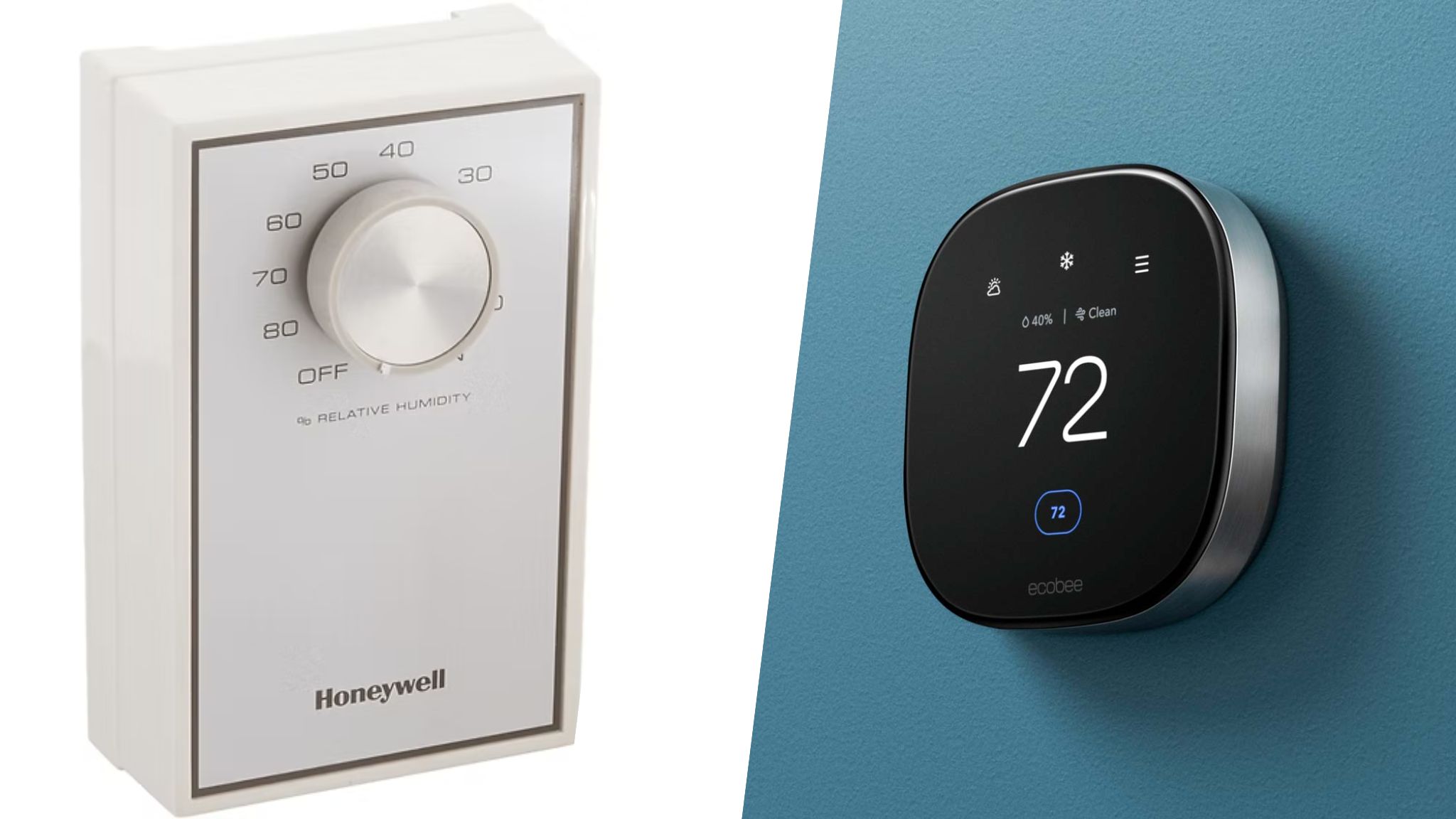
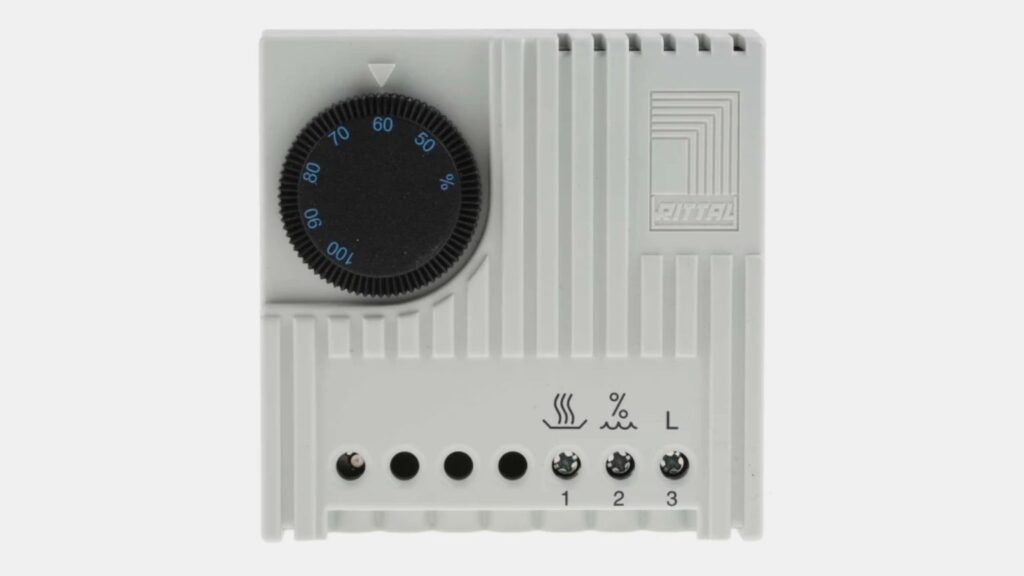
A humidistat (also called a hygrostat) measures the relative humidity in a room and controls a humidifier or dehumidifier to maintain a target humidity level. It works on the same feedback loop principle as a thermostat, but instead of measuring temperature and controlling cooling, it measures moisture content in the air and controls moisture addition or removal.
The sensor inside a humidistat is a hygroscopic element, typically a polymer film or ceramic material that changes its electrical resistance as humidity changes. The device reads this resistance, converts it to a relative humidity percentage, and compares it to your setpoint. If humidity is too high, it activates a dehumidifier or signals the HVAC system to run in dehumidification mode. If humidity is too low, it activates a humidifier.
In the UAE context, the relevant function is almost always dehumidification. The challenge in coastal UAE cities is not dry air (though inland areas like Al Ain can be quite dry). The challenge is excess humidity that enters the home through open doors, ventilation systems, and even through building materials in older properties. Indoor humidity above 60% creates conditions for mold growth, musty odors, condensation on windows and AC vents, and aggravation of respiratory conditions like asthma and allergies.
Thermostat vs Humidistat: Side-by-Side Comparison
| Feature | Thermostat | Humidistat (Hygrostat) |
|---|---|---|
| What it measures | Air temperature (degrees Celsius) | Relative humidity (percentage) |
| What it controls | AC compressor, fan, heating system | Humidifier or dehumidifier |
| Sensor type | Thermistor (resistance changes with temp) | Hygroscopic element (resistance changes with moisture) |
| Ideal range for UAE | 22 to 25 degrees Celsius when occupied | 40% to 60% relative humidity |
| Essential in UAE homes? | Yes, required for any AC system | Beneficial for coastal properties, optional for inland |
| Smart versions available? | Yes (Nest, Ecobee, Honeywell) | Built into some smart thermostats, also available standalone |
| Alternative name | None | Hygrostat |
| Connection | Wired to AC/HVAC via 24V circuit | Wired to humidifier/dehumidifier or HVAC humidity control |
Why Humidity Matters More in the UAE Than Most Countries
The UAE has two distinct humidity profiles depending on location, and understanding which one applies to your home determines whether you need humidity control alongside temperature control.
Coastal cities (Dubai, Abu Dhabi, Sharjah, Ajman, RAK, Fujairah): During summer months (June through September), relative humidity regularly reaches 80 to 95% in the early morning and late evening, even while temperatures exceed 40 degrees Celsius. The combination of extreme heat and high humidity creates a “heat index” that makes the perceived temperature feel 5 to 10 degrees higher than the actual reading. Indoor humidity in coastal apartments and villas, particularly in areas like Dubai Marina, JBR, Palm Jumeirah, Abu Dhabi Corniche, and Sharjah’s Al Majaz waterfront, can reach 65 to 75% if the AC system is not managing moisture effectively.
Inland cities (Al Ain, parts of Abu Dhabi, desert communities): Humidity is generally lower, often dropping below 20% during winter months. The air is dry, and the primary concern shifts from excess moisture to insufficient moisture. Dry air can crack wooden furniture, dry out nasal passages, and create static electricity problems. In these areas, a humidifier (controlled by a humidistat) that adds moisture to the air can improve comfort and protect furnishings.
What happens when indoor humidity is uncontrolled in a UAE coastal home:
- Mold growth. Humidity above 60% combined with UAE temperatures creates ideal conditions for mold, particularly in bathrooms, behind furniture against exterior walls, inside wardrobes, and around AC vents. Mold remediation in a Dubai apartment can cost AED 2,000 to AED 8,000 depending on the extent of damage.
- Condensation on windows and AC vents. When humid outdoor air meets cold AC-cooled surfaces inside the home, water droplets form. Over time, this condensation damages paint, causes water stains on ceilings near AC vents, and can corrode metal fixtures.
- Musty odors. Excess moisture trapped in carpets, curtains, and upholstery creates persistent odors that are difficult to eliminate without addressing the humidity source.
- Health effects. High indoor humidity aggravates asthma, allergies, and respiratory conditions. Dust mites, which are a major allergen, thrive in humidity above 50%.
Do You Need Both a Thermostat and a Humidistat in the UAE
Every UAE home needs a thermostat. Whether you also need a humidistat depends on your location, your building type, and whether you are already experiencing humidity-related problems.
You probably need humidity control if:
- You live in a coastal area (Dubai Marina, JBR, Palm Jumeirah, Abu Dhabi Island, Sharjah waterfront) and notice condensation on windows, musty smells in wardrobes, or visible mold in bathrooms.
- Your building uses fan coil units connected to district cooling (Empower or Tabreed). FCU systems cool the air by passing it over chilled water coils, which removes some moisture. But in high-humidity conditions, the FCU may not dehumidify sufficiently on its own, especially if the system is undersized for the space.
- You have a medical condition affected by humidity, such as asthma or dust mite allergies.
- You store humidity-sensitive items (leather goods, artwork, musical instruments, cigars) that require stable moisture levels.
A thermostat alone is likely sufficient if:
- You live inland where humidity is naturally low.
- Your AC system effectively dehumidifies as a byproduct of cooling (most split ACs and ducted systems do this to some degree).
- You do not experience condensation, mold, or musty odors in your home.
Smart Thermostats with Built-in Humidity Monitoring
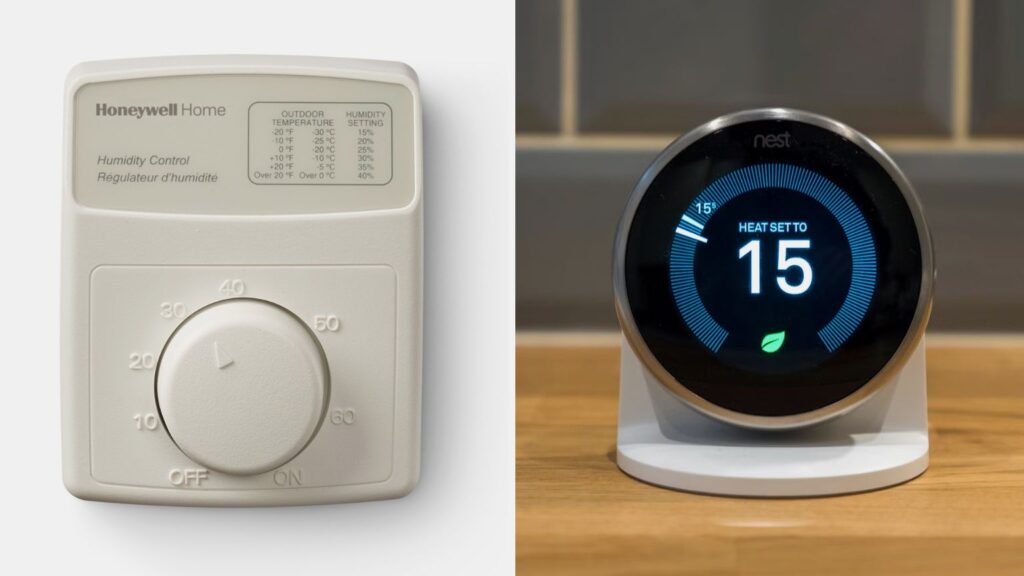
Several smart thermostats include humidity sensors that measure indoor relative humidity and display it in the app. This gives you visibility into your home’s moisture levels without needing a separate humidistat. However, monitoring and controlling are two different things.
Thermostats that monitor humidity:
- Nest Learning Thermostat (4th Gen): Displays indoor humidity on the thermostat screen and in the Google Home app. The Dynamic Farsight display shows humidity when you approach the thermostat. However, it can only control a connected humidifier or dehumidifier if your HVAC system has one wired into the thermostat circuit.
- Ecobee3 Lite and Ecobee Premium: Both display humidity in the Ecobee app. The Ecobee Premium adds air quality monitoring (volatile organic compounds) alongside humidity. Both can control a wired humidifier or dehumidifier if your system supports it.
- Nest Thermostat (budget model): Basic humidity reading available in the Google Home app but with less detail than the Learning models.
Thermostats that can actively control humidity:
The Nest Learning Thermostat (3rd Gen and 4th Gen) and both Ecobee models support wired connections to humidifier and dehumidifier systems. If your HVAC setup includes a whole-home dehumidifier (common in premium villas with ducted AC), the thermostat can act as both a thermostat and a humidistat, controlling temperature and humidity from a single device.
The standard Nest Thermostat (budget model) does not support humidifier or dehumidifier control. If humidity management is important to you, this is one reason to consider stepping up to the Nest Learning Thermostat or Ecobee3 Lite. For the full comparison of what each model offers, see our Nest vs Ecobee comparison or our Nest model comparison guide.
When a Standalone Humidistat Is the Better Choice
A standalone humidistat (hygrostat) makes more sense than relying on a smart thermostat’s humidity features in the following situations:
- You have a portable dehumidifier. Most standalone dehumidifiers sold in the UAE have a built-in humidistat that lets you set a target humidity percentage. The dehumidifier runs until it reaches the target and then shuts off. This is the simplest and most affordable humidity control solution for apartments.
- You need zone-specific humidity control. If only one room has a humidity problem (a bathroom, a ground-floor bedroom against an exterior wall, a storage room), a standalone humidistat controlling a room-specific dehumidifier is more practical than trying to manage whole-home humidity through the HVAC system.
- Your HVAC system does not support humidifier/dehumidifier wiring. Most UAE split AC systems and basic fan coil units do not have dedicated humidifier terminals. A standalone humidistat bypasses the HVAC system entirely by controlling a separate device.
- You want to protect specific items. Wine storage, cigar humidors, art collections, and musical instruments need precise humidity control (typically 50 to 55% for most applications). A standalone humidistat in the storage area provides tighter control than a whole-home system.
For most UAE apartments with standard split ACs or fan coil units, a portable dehumidifier with a built-in humidistat is the most practical approach to humidity control. It works independently of your thermostat, costs AED 300 to 800, and can be moved between rooms as needed. The thermostat handles temperature; the dehumidifier handles moisture. Both problems solved, no complex HVAC integration required.
If you are dealing with a broader HVAC question about which thermostat or controller is right for your system, our smart thermostat buyer’s guide walks you through the decision based on your specific AC type and home size. And if your thermostat or AC system is behaving erratically (which can sometimes be caused by humidity-related sensor issues), our common thermostat issues guide covers troubleshooting specific to UAE conditions.
Frequently Asked Questions
Is a hygrostat the same as a humidistat?
Yes. A hygrostat and a humidistat are the same device. Both measure relative humidity and control a humidifier or dehumidifier to maintain a set moisture level. The term ‘hygrostat’ comes from the Greek word for moisture, while ‘humidistat’ follows the English naming convention used for ‘thermostat.’ Different manufacturers use different names, but the function and technology are identical.
What is the difference between a thermostat and a humidistat?
A thermostat measures air temperature and controls your AC or heating system to maintain a target temperature. A humidistat measures relative humidity and controls a humidifier or dehumidifier to maintain a target moisture level. They measure different environmental factors (temperature vs humidity) and control different equipment, but both use the same feedback loop principle: measure, compare to setpoint, switch equipment on or off.
Do I need a humidistat in the UAE?
It depends on your location and whether you experience humidity problems. Coastal UAE homes (Dubai Marina, JBR, Abu Dhabi Corniche, Sharjah waterfront) often benefit from humidity control because summer humidity regularly reaches 80 to 95% outdoors, which drives indoor levels above 60%. Inland homes and well-sealed newer buildings typically do not need separate humidity control. Signs you need one: condensation on windows, mold in bathrooms, musty smells in wardrobes.
Can a smart thermostat also control humidity?
Some can. The Nest Learning Thermostat (3rd Gen and 4th Gen) and Ecobee models support wired connections to humidifiers and dehumidifiers if your HVAC system includes one. They also display humidity readings in their apps. The standard Nest Thermostat (budget model) monitors humidity but cannot control a humidifier or dehumidifier.
What is the ideal indoor humidity level for UAE homes?
The recommended range is 40% to 60% relative humidity. Below 40% and the air feels uncomfortably dry, which can irritate skin and respiratory passages. Above 60% and you risk mold growth, condensation, and dust mite proliferation. In coastal UAE cities during summer, maintaining indoor humidity below 60% often requires either a dehumidifier or an HVAC system with active humidity control.
Does running the AC reduce humidity?
Yes, partially. When your AC cools the air, moisture condenses on the evaporator coil and drains away through the condensate pipe. This naturally reduces indoor humidity as a byproduct of cooling. However, in highly humid UAE coastal conditions, the AC may not dehumidify enough on its own, especially if the system is set to a relatively high temperature (24 to 26 degrees) where it cycles off before removing sufficient moisture. A dedicated dehumidifier provides more effective humidity control.
Where should I place a humidistat in my UAE home?
Place it in the room where humidity is highest or most problematic. For most UAE apartments, this is the main living area or a bedroom with an exterior wall. Avoid placing it in bathrooms (temporary high humidity from showers gives false readings), near windows (direct sunlight affects readings), or near AC vents (cold air from the vent affects the sensor). For whole-home monitoring, smart thermostats like the Ecobee3 Lite display humidity readings from the thermostat’s central wall location.
Need help with temperature or humidity control in your UAE home? We supply and install smart thermostats with humidity monitoring across Dubai, Abu Dhabi, Sharjah, and every other emirate. Message us on WhatsApp at +971 50 633 7803 to discuss which setup is right for your home, or browse our full product range.
Call us directly at +971 50 633 7803 or visit our contact page to get started.